Seneca Lake


Location: Across Ontario, Seneca, Yates, and Schuyler Counties, New York.
Surrounding Communities: Geneva; Dresden; Lodi; Watkins Glen
Maps: Google Map; Topographic; Contour map
GPS Coordinates:
- Northern outlet, Cayuga-Seneca Canal: N 42.868 / W 76.940
- Western inlet, Keuka Lake Outlet: N 42.683 / W 76.947
- Southern inlet, Catharine Creek: N 42.384 / W 76.863
Size:
- Area: 42,800 acres
- Length: 38 miles
- Max width: 1.9 miles
Max depth: 618 feet.
Volume: 4.2 trillion gallons.
Water Quality: High
Water supply for Geneva and Watkins Glen
Elevation: 445 feet.
Directions: NY-14 runs along the west side of the the lake, while NY-96A and NY-414 skim the eastern side. NY-20 passes through Geneva on the northern end.
Weather
Description
Pronunciation: “sen-nih-kah.” From the Iroquois name meaning “Place of stone.”
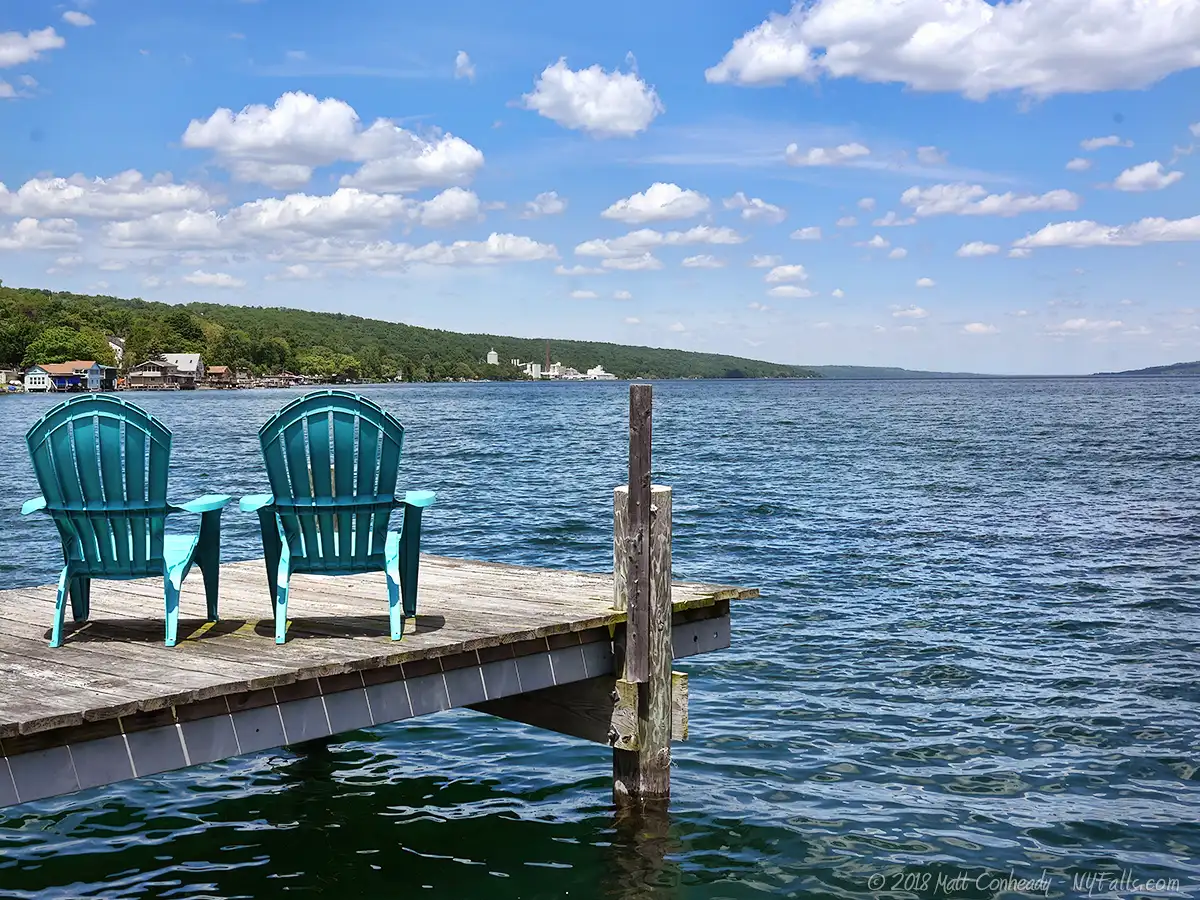
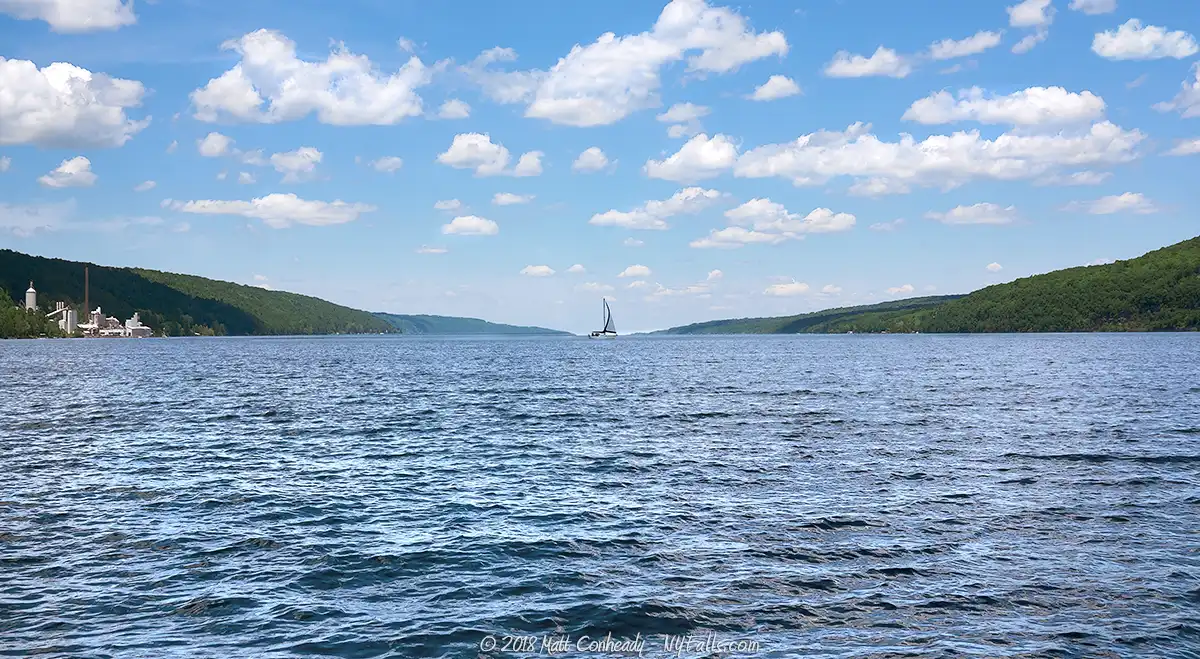
Seneca Lake, the deepest and widest of the Finger Lakes, holds nearly half of their total volume. Reaching depths of 618 feet (the second deepest in the state), it rarely freezes over (only 9 recorded times), and provides a near-optimal habitat for Lake Trout. The deep, clear waters also make it an ideal place for the US military to test sonar and deep sea equipment. Seneca’s waters remain moderate throughout the year, cooling the surrounding air, which tends to linger in the lake valley. This microclimate of cool, stable air, combined with the massive lake watershed, makes the surrounding land ideal for agriculture, especially vineyards.
Seneca Lake has two inlets: Catharine Creek flows in from the south at Watkins Glen and the Keuka Lake Outlet brings Keuka Lake‘s waters in from the west at Dresden. At Geneva the lake empties into the Cayuga Seneca Canal, which runs east through Waterloo, Seneca Falls and eventually ends up in Cayuga Lake.
Capping the northern shore is the City of Geneva, a beautiful setting with a rich history and popular waterfront. Wineries and resorts are thriving here, with Belhurst Castle and Geneva on the Lake being tourist favorites. Hobart and William Smith Colleges (once called Geneva College), situated on the lake shore to the west, admitted and awarded a medical degree to Elizabeth Blackwell in 1849, making her the first woman doctor in the northern hemisphere.
On the southern end is the village of Watkins Glen; known to many across the country for the Watkins Glen International Raceway. Entertaining racing fans of all types for over 50 years, events at the track can easily draw in crowds that eclipse the village’s population. For outdoors and waterfall lovers, the many parks, including the magnificent Watkins Glen State Park, Aunt Sarah’s Falls, and the giant Shequaga Falls in the middle of the village of Montour Falls provide some of the best examples of the Finger Lake’s unique geology.
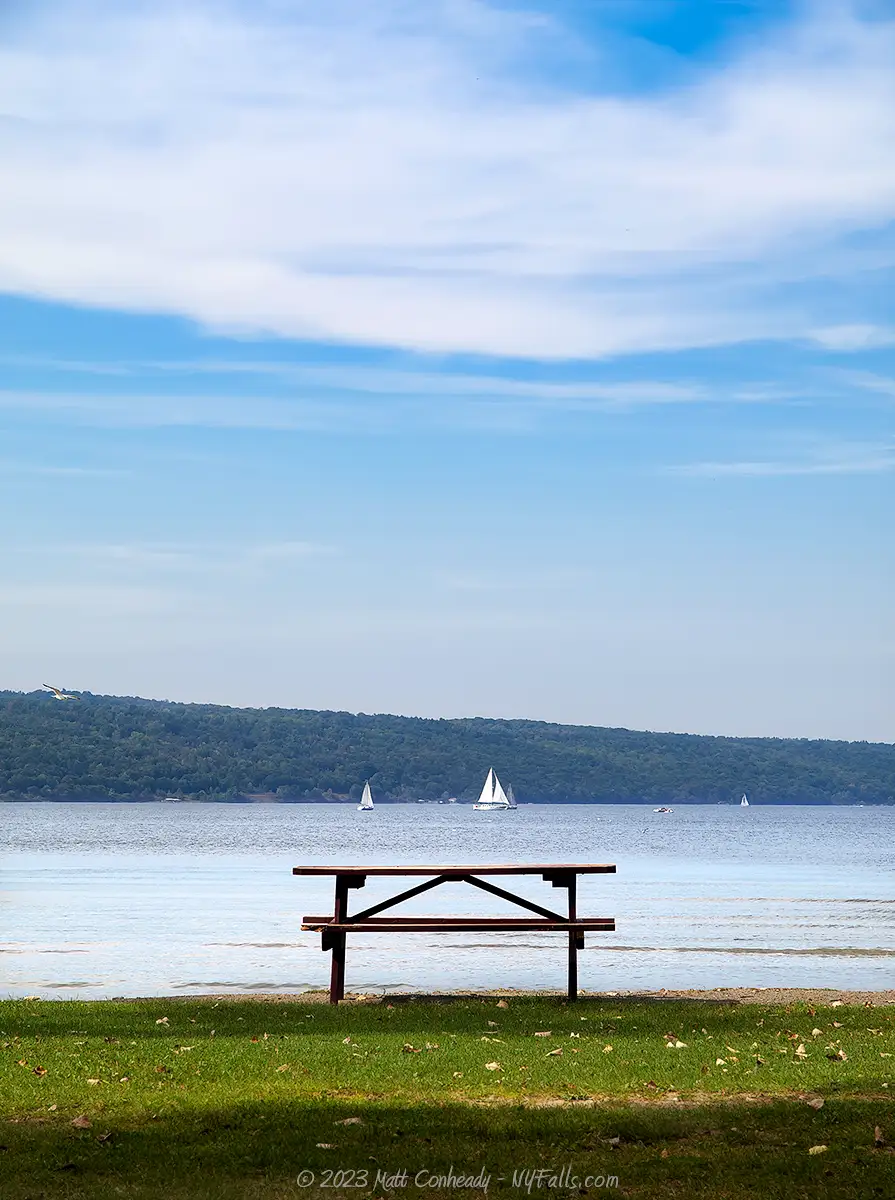
Like the other Finger Lakes, Seneca is surrounded by rolling hills of agriculture and mottled with forest to the east and west. Cottages and homes are scattered about the farms and concentrate around the shore. To the south, the cottages back off as cliffs as high as 600 ft lift up from the lake’s basin, isolating the waters from the surrounding landscape. Spring meltwater creates numerous waterfalls that pour over the cliffs – a sight that gets quite a few boaters out on the first warm days of the year.
Numerous parks dot the shoreline; from ones that cater to families, with their playgrounds, ball fields, and spray parks, to rough-and-rugged outdoor experiences like those provided by the nearby Finger Lakes National Forest. Fishermen come from all over for some of the best Lake Trout fishing (peaking with a world-class tournament on Memorial Day). Visitors often rent scenic cabins for weekends or weeks at a time in order to fit in everything they want to do.
The Seneca Nation, the westernmost tribe of the Iroquois Confederacy, once inhabited the land surrounding Seneca Lake. That changed in 1779, when George Washington ordered General John Sullivan to aid the Revolutionary War effort by bringing “total destruction and devastation” to “hostile” Iroquois settlements (who were aiding the British). Many Seneca villages were destroyed in the campaign. Thousands more were driven from the region, and those who remained, struggled to maintain a standard quality of life. After the war, revolutionary soldiers were paid for their service with parcels of land, much of which was captured during the Sullivan Expedition, around Seneca Lake.
The terrain surrounding Seneca is rich in nutrients and moisture – optimal for agriculture and an excellent prize for soldiers looking to settle and start a farm. Unfortunately, the hilly terrain, which is covered in thick forests and striped with deep gorges, isolated the farms from outside markets and hindered the growth of commercial farming in the region. It wasn’t until the opening of the Erie Canal (and the Cayuga-Seneca Branch), that Seneca Lake agriculture had a pathway to markets around the state. Soon after, the Crooked Lake Canal (now the Keuka Lake Outlet) linked Keuka Lake to Seneca. Towns flourished and the Finger Lakes quickly became agricultural hot-spots.
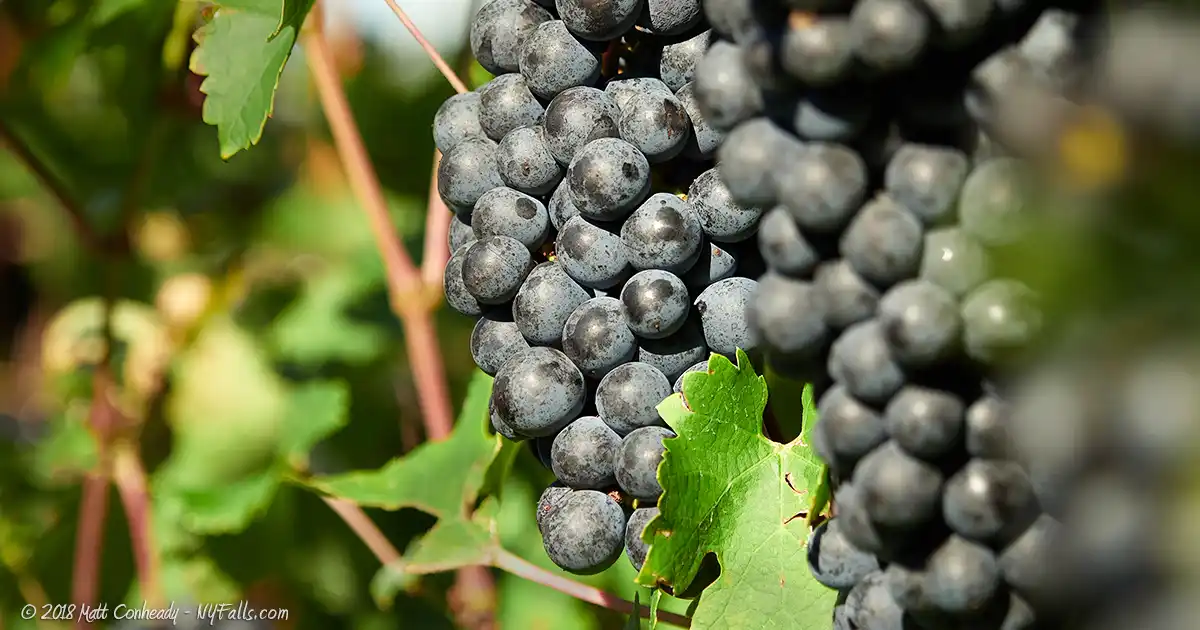
The Finger Lakes wine industry prospered. Seneca Lake, with its cool and stable microclimate proved to be better for vineyards than the other lakes. Today, over 50 wineries surround the lake; offering varieties with diverse heritage and astounding creativity. Seneca Lake wines have won national awards and many garner favorable reviews from critics. Most Seneca Lake wineries offer tastings and tours, which has bloomed into a multi-million dollar tourism industry. Various shops, cafes, restaurants and resorts fill in the voids between wineries, offering visitors a taste of local crafts and cuisine.
Despite being a freshwater lake, one of its principal industries is salt. Salt deposits, from an ancient evaporated ocean, lie embedded thousands of feet below the bedrock. This deposit is massive; stretching from Albany across parts of Pennsylvania, Ohio, Southern Ontario, and all of Michigan. The Cargill and US Salt plants located at the southern end of the lake in Watkins Glen, utilize the Lake’s waters to dissolve the deposits. They then pipe the saline up from a well and evaporate the salt into crystals. The salt mined here ends up on tables, roads, and in factories across the US.
The United States Military took an interest in Seneca Lake in the early 1940s and constructed a munitions storage facility on the land between Seneca and Cayuga Lake in 1941. The Seneca Army Depot was over 10 thousand acres of controversy, and still is. Decommissioned in 1999, and costing county taxpayers millions in the process, only a small fraction of the property has been reclaimed for business. While county leaders would like to see more businesses take over the site, some people want to preserve a large population of “white deer” that have called the fenced-in property home for over 60 years.
Seneca Lake has a rich naval history as well. In 1942 the US Navy constructed the 2,600 acre Sampson Naval Training Base on the eastern shore (adjacent to the Army Depot). Over 400,000 Navy personnel went through training here in order to serve in WWII. After the war, the grounds served as a college, educating thousands of returning veterans. For the Korean War effort, the base was transferred to the Air Force and was used to train over 300,000 personnel. Today, the land is the largest State Park in the Finger Lakes region, housing a museum dedicated to its military history. Visitors can wander the grounds looking for traces of the former base, including roads and foundations.

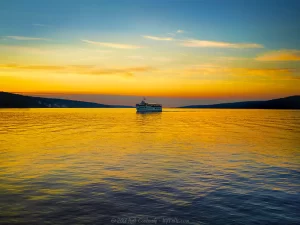
Seneca Lake Parks / Beaches / Access Points
Seneca Lake State Park
Description: With a refreshing spray park, featuring over 100 water jets, and a large modern playground, this park is a favorite with children. The whole family can enjoy the sandy swimming area, bike and walking paths and picnic areas along the shoreline. There are numerous playing fields for sports lovers, and a nature trail for a quick and easy hike. Boaters can take advantage of the two marinas and public boat launch along the canal. The park tends to get busy on hot summer days.
Seasons/Hours: Year-round. Park closes at dark.
Directions: Northern end of the lake, in Geneva. Entrance on NY-20. Google Maps.
Parking: Adequate parking in the lot near the spray park and bathhouse.
Best time to visit: Summer.
Pets: Allowed (on leash and with proof of inoculation), not allowed in bathing areas.
Admission: State park parking fee of $8/car during peak summer days/holidays.
Handicap accessibility: Yes.
Swimming: Allowed in the guarded swimming area. Swimming is usually from the end of May until Mid August. A kids’ spray park is also available. Call (315) 789-2331 for spray park and beach hours.
Boat Launch: Trailer launch ramp on the east end of the park at the fully equipped marina.
Accommodations: Restrooms; picnic tables; spray park; bathhouse; showers; playground; playing fields; fishing; trails; biking; pavilions; x-country skiing; snack bar.
Contact: NYS Parks: (315) 789-2331
Map: Park Brochure.
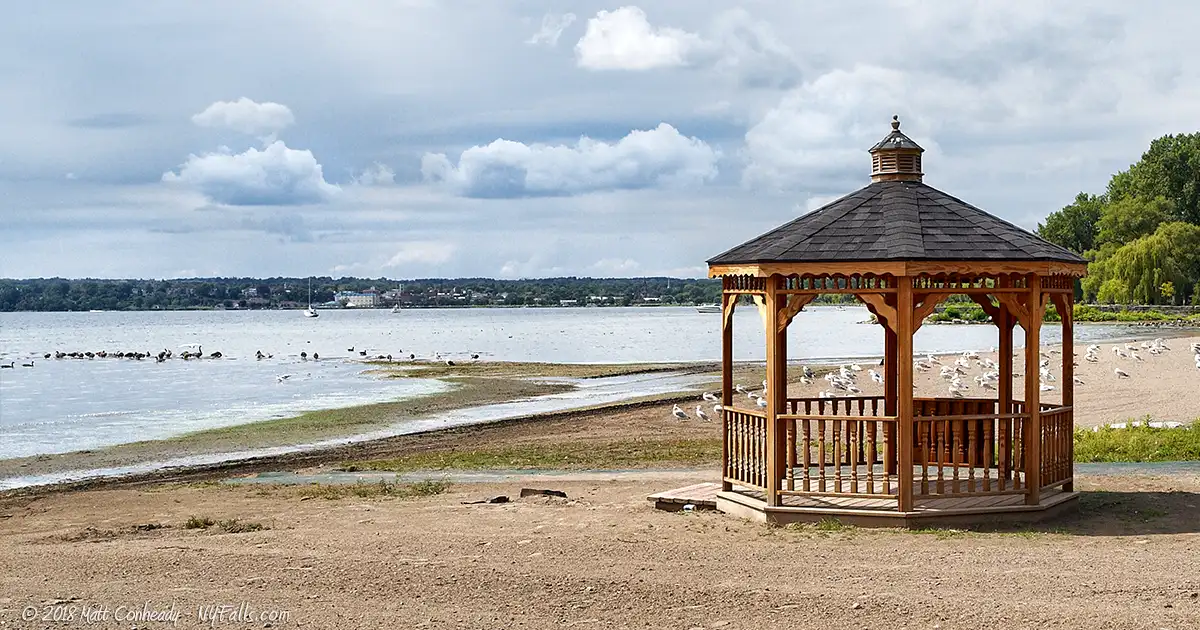
Geneva Lakefront Park
Description: The Geneva Lakefront is relatively new; created by the relocation of State Routes 5 & 20 from the shores of Seneca Lake in 1987. The city has done a wonderful job of creating a scenic park that makes for a great place to fish, walk, bike, or sit and enjoy the scenery. A boat launch and several slips cater well to boaters, and those willing to get a bit closer to the water can rent a paddle boat or kayak at the ice cream shop at the base of Long Pier (near the Marriott). In July and August, free concerts are held at the lakefront Gazebo. In the middle of the park is the Geneva Chamber of Commerce building, which doubles as an information center and serves as a great place to start a weekend in the Finger Lakes.
Seasons/Hours: Year-round. Dawn until dusk.
Directions: Northern end of the lake, in Geneva. Lake St. off of NY-20. Google Maps.
Best time to visit: Spring through fall.
Pets: Yes, on leash (clean-up stations provided).
Admission: Free.
Parking: Park in the lot where Lake St reaches NY-20. There are three parking lots here. There is aanother, smaller lot southwest of here near the pier (south of the hotel).
Handicap accessibility: Yes, a lot of it is paved walkways with plenty of views of the lake. The per is accessible.
Swimming: Not allowed.
Boat Launch: Two ramps for trailer launches can be found just north of the Lake Street entrance. Hand launch is also possible.
Accommodations: Restrooms; picnic tables; docking facilities; fishing; gazebo; lake tours; garden; Finger Lakes tourism information; concessions and bike/kayak/paddleboat rentals at Long Pier Ice Cream (located at the base of the pier near the hotel); several hotels and restaurants are within walking distance.
Contact: Geneva Recreation Department: 315-789-5005.
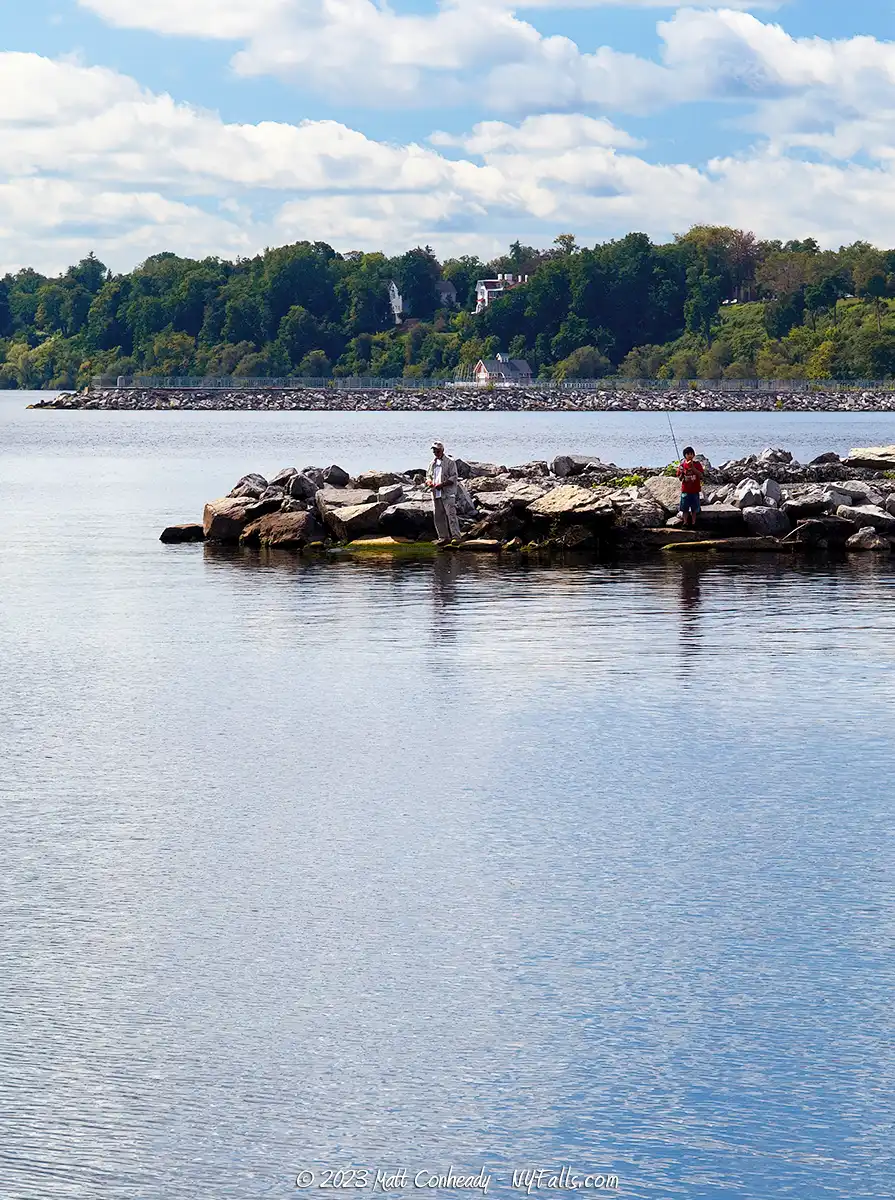
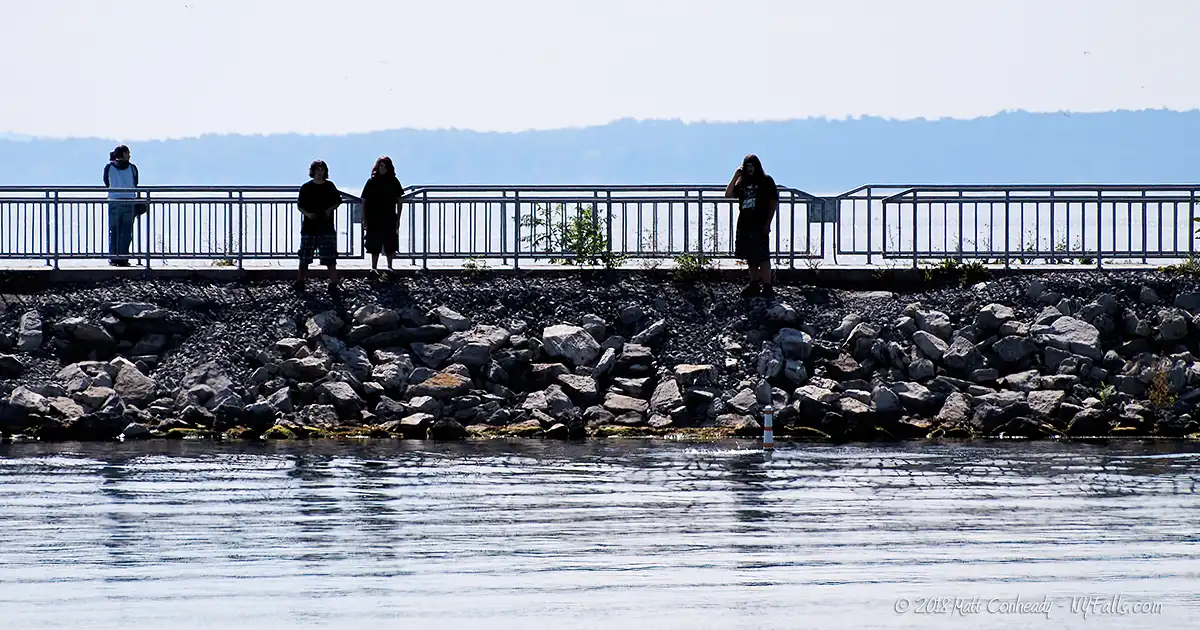
Severne Point
Description: A public boat launch operated by the DEC. Features a concrete ramp, dock, and parking for about 30 cars and trailers.
Seasons/Hours: Year-round. Dawn until dusk.
Directions: Western side of the lake, 8 miles south of Dresden, on Severne Point Rd, off of Rt. 14. Google Maps.
Parking: 30 cars/trailers
Best time to visit: Spring through fall.
Pets: Allowed (on leash and with proof of inoculation).
Admission: Free.
Handicap accessibility: Yes
Swimming: Not allowed.
Boat Launch: Hand and trailer boat launch.
Accommodations: None.
Contact: NYSDEC Bureau of Fisheries: (518) 402-8920
Seneca Harbor Park
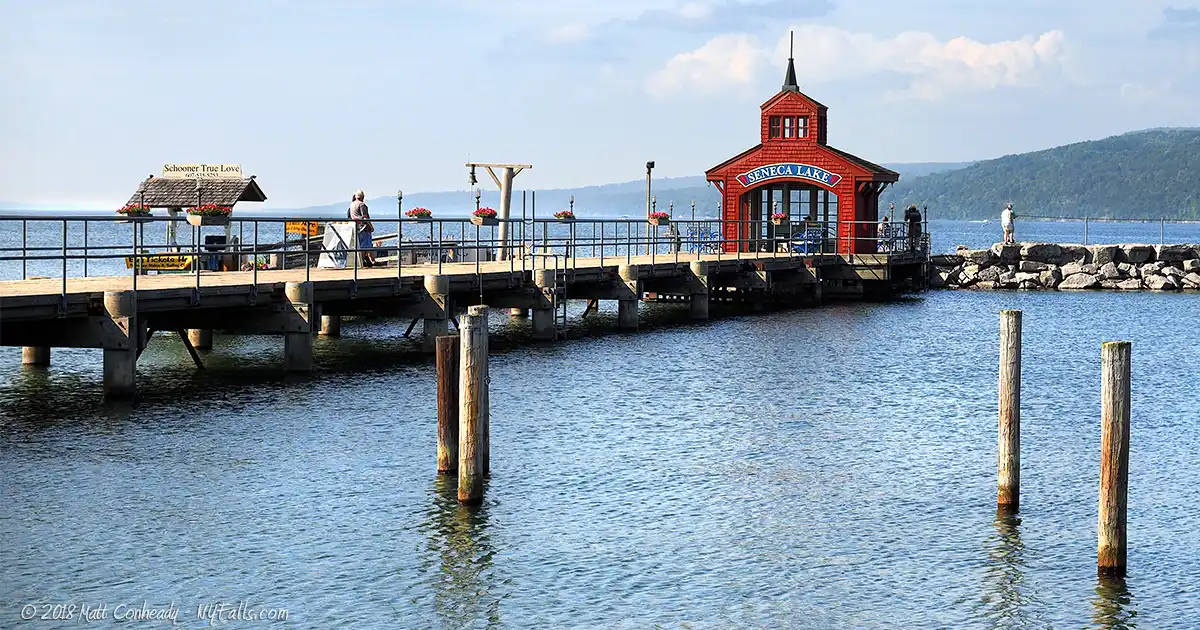
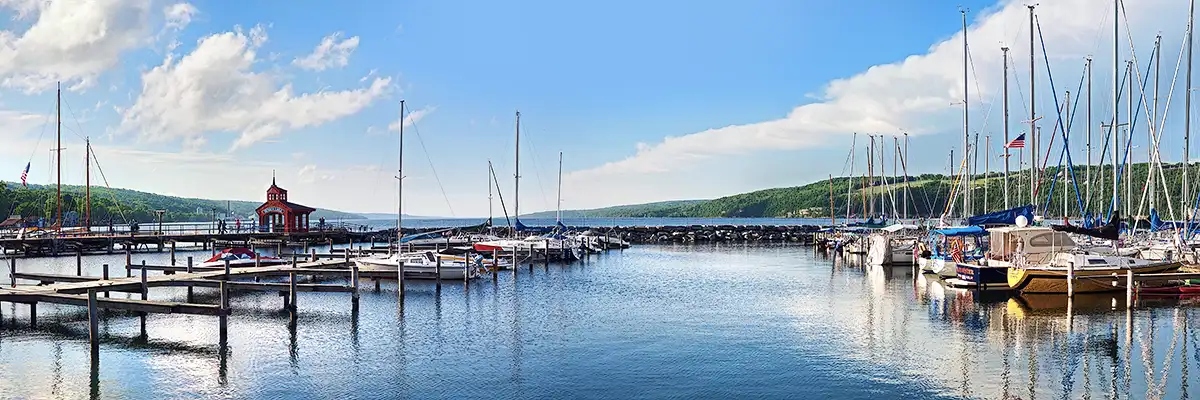
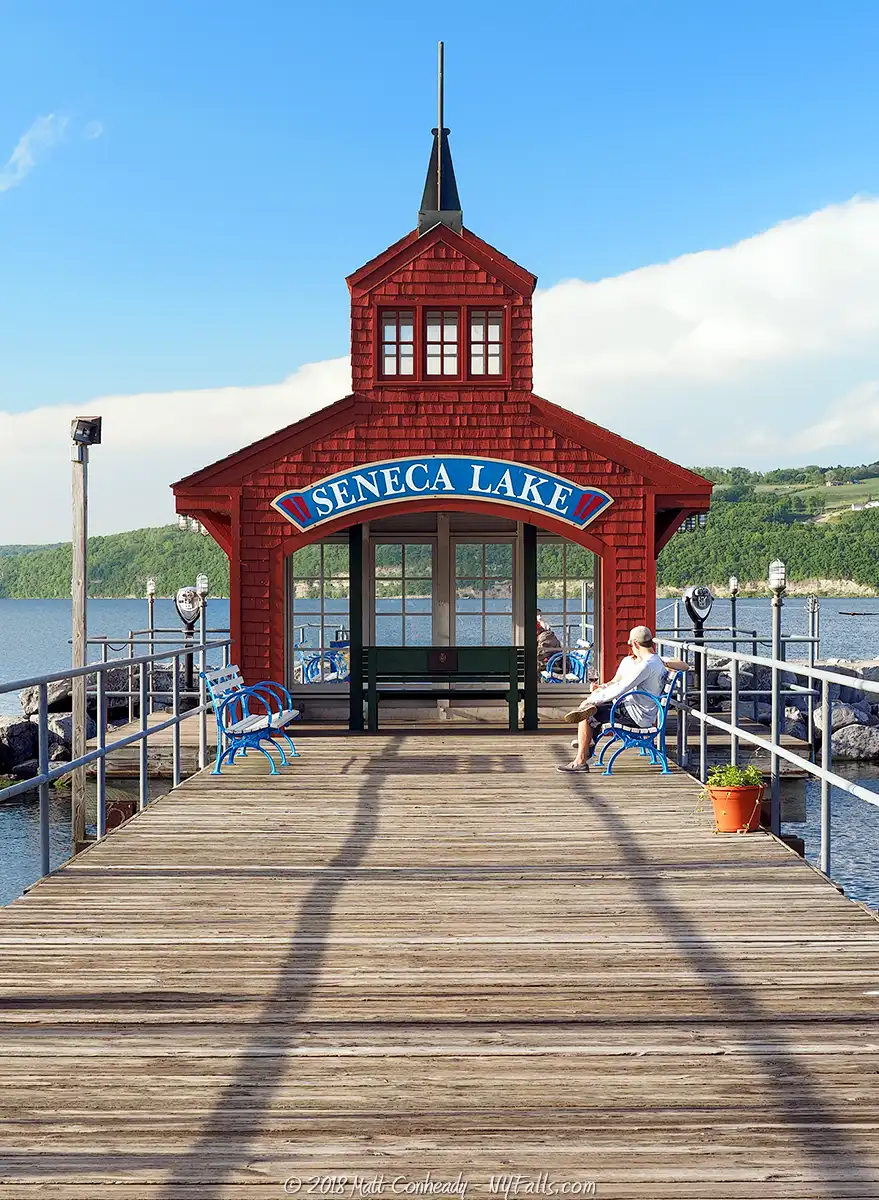
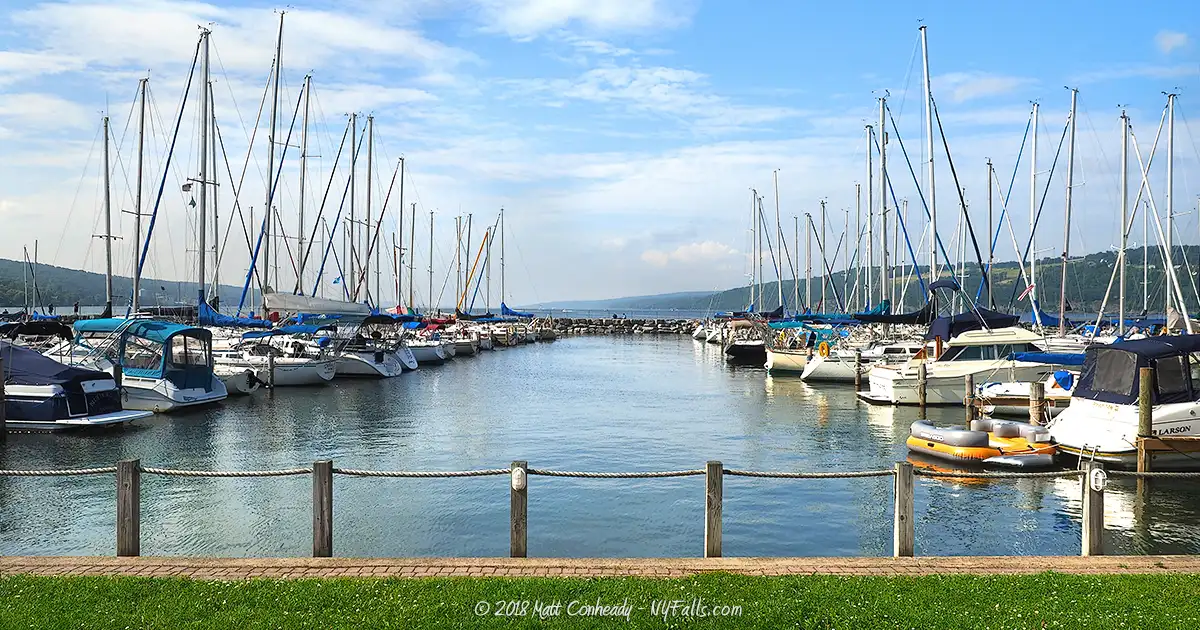
Description: This Watkins Glen waterfront is small, but beautiful. With the marina on one side and the new Watkins Glen Harbor Hotel on the other, there’s room for a just few picnic tables and a comfort station. A pier with a small red shelter offers not only a great fishing platform, but a short scenic walk. What makes this park so special is what surrounds it. Right next door you have the Seneca Harbor Station Restaurant where you can enjoy the lake from their covered deck. The Finger Lakes scenic railway passes by here, often blowing its whistle and turning heads. Captain Bill’s Tours offers both dinner cruises and a quick guide to the lake. You can purchase tickets in the gift shop. The Seneca Harbor Wine Center offers tastings and sells various wines and champagnes from Finger Lakes wineries.
Seasons/Hours: Year-round, until dark.
Directions: Southern end of the lake in Watkins glen. Off of Rt.14 near the Seneca Harbor Station. Google Maps.
Parking: Park at the Seneca Harbor Station or in the marina lot off of N Decatur St.
Best time to visit: Spring through fall.
Pets: Unknown policy.
Admission: Free
Handicap accessibility: Yes.
Swimming: Not allowed.
Boat Launch: None.
Accommodations: Restrooms, picnic tables, fishing, various eateries/shops in the village, boat tours, gift shop.
Contact: Village of Watkins Glen: (607) 535-4438
Clute Memorial Park (Lakeside Park)
Description: A fully-equipped camping park encompassing 25 acres and featuring over 100 campsites. Families can enjoy the ball fields, playground, skate park, or tennis courts, or visit the shore for a picnic or swim. The park also features a large community center and enclosed pavilion for rent right on the lake.
Seasons/Hours: Year-round. Camping season is from mid-May to mid-Oct.
Directions: Southern end of the lake in Watkins Glen. Surrounds NY-414 on the eastern side of Catharine Creek. Google Maps.
Parking: Plenty of parking within the southern end of the park or in the lot off of NY-414 near the lakefront portion.
Best time to visit: Summer.
Pets: Unknown policy.
Admission: Free for the park. Skating is $5.
Handicap accessibility: Some paved walkways.
Swimming: Yes, in the guarded area on the east side of the park. Swimming is from Memorial Day through Labor Day.
Boat Launch: Hand launch on the beach. There is a ramp launch and slips available on the barge canal at the camping end of the park.
Camping: Camping season runs from Mid-May to Mid-October. More information.
Accommodations: Restrooms; picnic tables; fishing; skate park; bathhouses; playground; tennis courts; playing fields; pavilions; large community center; fully-equipped campsites; various eateries/shops in the village.
Contact: Village of Watkins Glen: (607) 535-4438
Map: camping map.

Smith Memorial Park and Campground
Description: This community park offers woodland camping on the east shore of Seneca Lake. There is also a guarded swimming area, bathhouse, hiking trails, and boat launch.
Seasons/Hours: First week of May through September. Swimming open June through Labor Day.
Directions: East side of the lake in Hector. On Bond-Smith Park Rd, off of NY-414 in Hector. Google Maps.
Parking: Campsites include parking. Some parking sites near the boat launch and swimming area.
Best time to visit: Summer through fall.
Pets: Unknown policy.
Admission: Free. See camping and pavilion rates here.
Handicap accessibility: Somewhat.
Swimming: Allowed in the guarded swimming area only. Mid June thru Labor Day.
Boat Launch: Hand and trailer launch. Trailer launch fee is $4.
Camping: Several campsites available, including some electric sites. Rates are here.
Accommodations: Restrooms; picnic tables; fishing; bathhouse; hiking trails; picnic facilities.
Contact: Town of Hector: (607) 546-4467 or [email protected]
Lodi Point State Marine Park
Description: This small marine park is a little more off the beaten path than most Seneca lakeside parks, but its isolation is its charm. Primarily a boat launch with docking facilities, the park also features a playground, pavilion and picnicking facilities.
Seasons/Hours: Year-round; from dawn until dusk.
Directions: East side of the lake, in Lodi. Entrance on Lodi Point Rd., off of NY-414. Google Maps.
Parking: Space for 40 cars/trailers.
Best time to visit: Summer through fall.
Pets: Allowed (on leash and with proof of inoculation).
Admission: $7 vehicle entry fee collected from 10am-6pm weekends and holidays, May 21-September 5.
Handicap accessibility: Yes.
Swimming: Not allowed.
Boat Launch: Boat launch is covered under the vehicle entry fee. Slips in the marina are extra.
Accommodations: Restrooms; picnic tables; marina; fishing; pavilion; playground.
Contact: NY State Parks: (315) 585-6392

Sampson State Park
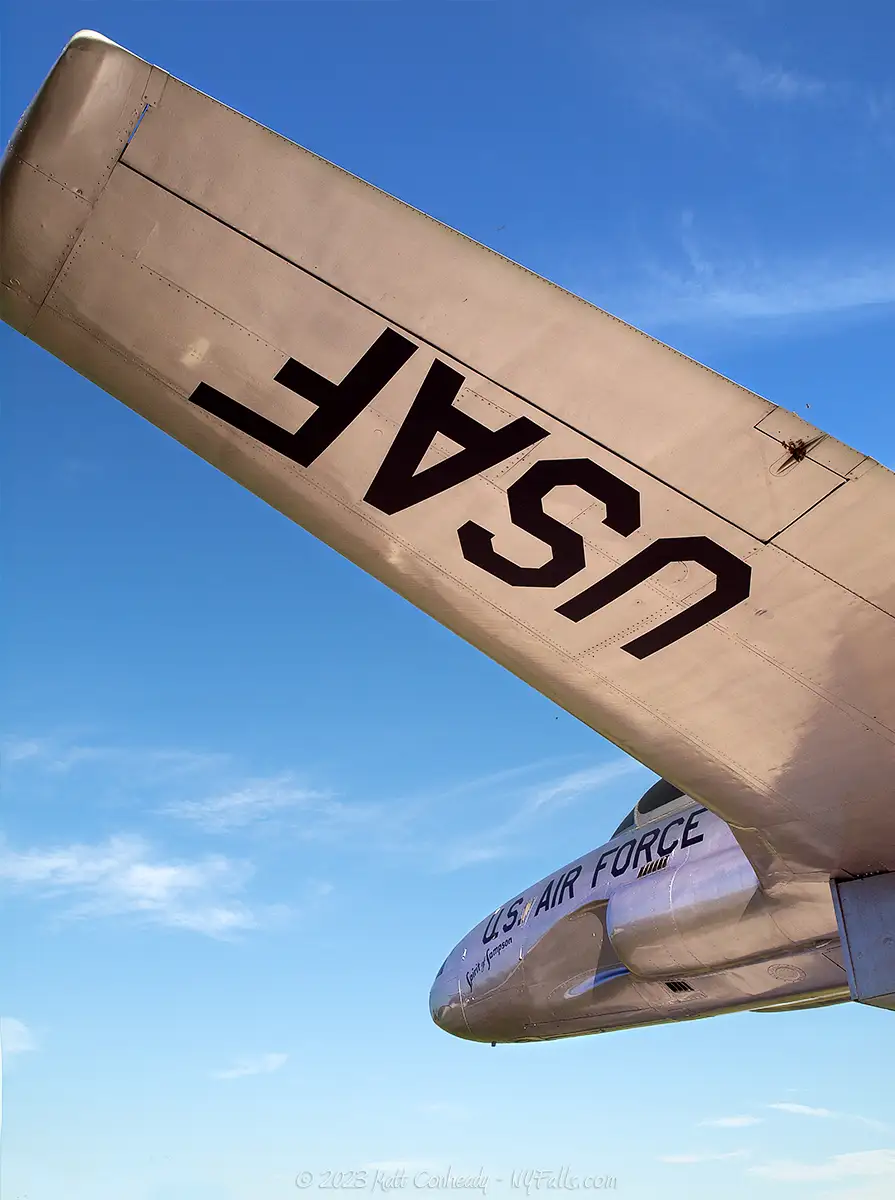
Description: This former Naval training station and Air Force base, is now the largest state park in the Finger Lakes. It has several roads (most of which are reconditioned from the base) that make for excellent cycling. Hiking trails are also present, where visitors can search for remnants of the base’s history. Although not much from this land’s military history is still standing, the former brig now serves as a museum. Photos, medals, weapons and even a plane are on display; with guided tours available. Most visitors come for the camping (245 electric sites) and swimming, with the park becoming one of the busiest in the summer. There are a few shallow gullies to explore, although they are rarely flowing with much water, and there are no significant waterfalls.
Seasons/Hours: Year-round; from dawn until dusk.
Directions: East side of the lake, near the Seneca Army Depot in Romulus. Entrance on NY-96A. Google Maps.
Parking: Plenty of spaces throughout the park.
Best time to visit: Summer.
Pets: Allowed (on leash and with proof of inoculation). Not allowed in swimming areas.
Admission: State park entry fee: $7/car.
Handicap accessibility: Yes.
Swimming: Lifeguard is on duty Memorial through Labor day. Call for more information.
Boat Launch: Trailer boat launch and marina.
Camping: 245 electric campsites. Book a campsite here.
Accommodations: Restrooms; picnic tables; grills; fishing, pavilions, playground, historic markers, museum/visitor center; playing fields of all types; bicycle rentals and paths; nature trails; recreation hall; camping, x-country skiing; showers, restaurant, convenience store.
Contact: NY State Parks: (315) 585-6392; Camping reservations: (800) 456-2267
Maps: Trail Map; Camping Map.
More Finger Lakes Guides
Explore more of New York’s Finger Lakes parks, beaches, nature trails, waterfalls and more in our handy guides.
Fishing Information
Common species
Brown trout; rainbow trout; landlocked salmon; largemouth bass; smallmouth bass; yellow perch; northern pike; chain pickerel; rock bass; crappie; sunfish; bullheads; bowfin; white suckers; channel catfish; lake sturgeon; carp; alewives; smelt.
Best fishing spot
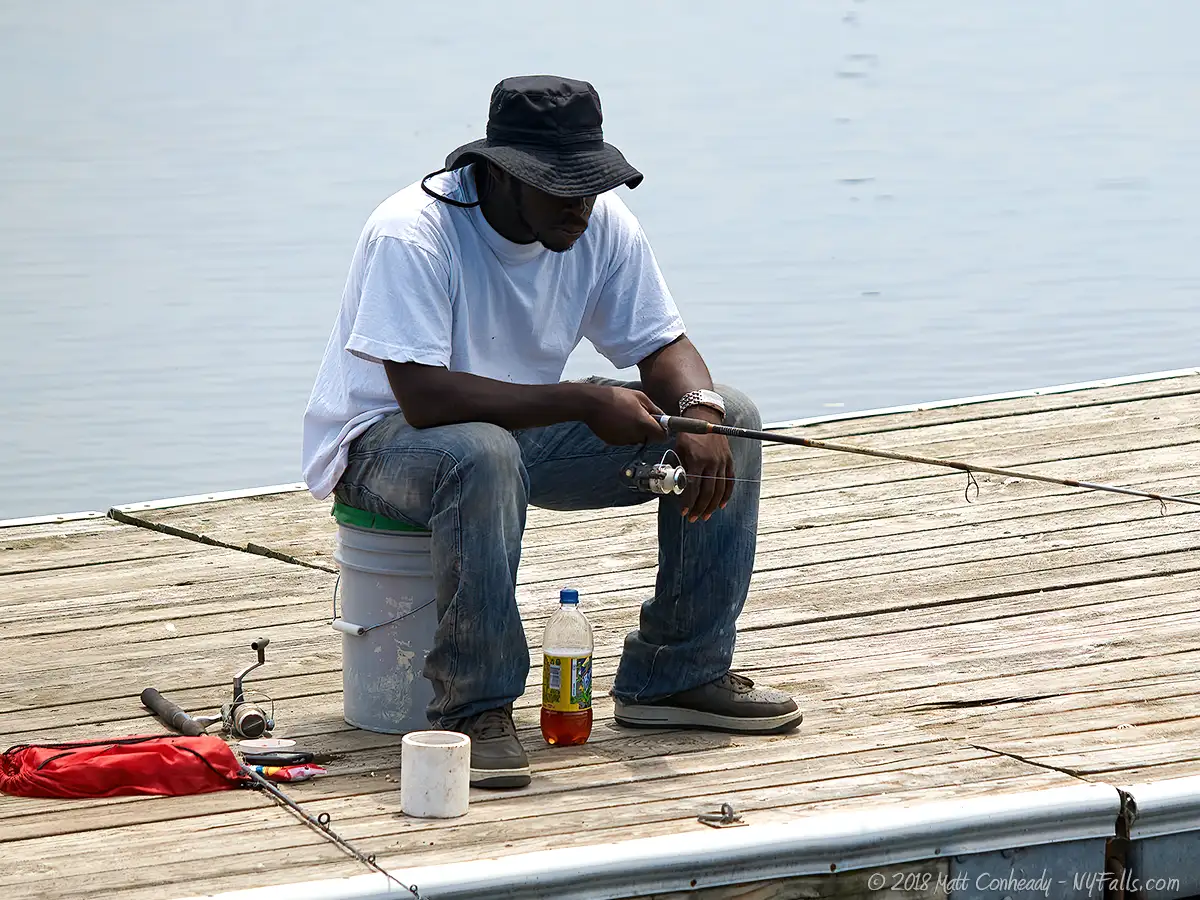
From the secluded shores of Sampson State Park, off the trails, south of the marina.
Fishing conditions
For current fishing information a fishing hotline is available at Central New York Fishing Hotline or by calling (607) 753- 1551.
Nearby Waterfalls

Interesting Stuff
Seneca Lake Wine Trail
The Seneca Lake Wine Trail is a great way to experience Seneca Lake through its most popular wineries. The tour organizes trail-wide events, awards, games, offers maps, sight-seeing/driver recommendations and tasting discounts. The information they provide is a great way to plan your wine-tasting trip. It is also recommended you use one of the many driving tour companies that service Seneca Lake.

Mid-lake Platform
What is that man-made platform in the middle of the lake near Dresden? It’s the Navy’s Seneca Lake Sonar Test Facility. According to their website, “the facility performs test and evaluation of equipment ranging from single element transducers to complex sonar arrays and systems.” Because of Seneca Lake’s location, solid rock basin, depth, and relatively low boater traffic, this is an ideal spot for this type of testing. Satellite view.
Guns of the Seneca
Considered a common phenomenon for coastal areas, residents claim to hear occasional pops, (sounding similar to cannon fire in the distance) coming from the lake. Cayuga and Seneca Lakes both have reports of this happening. More information.
Finger Lakes National Forest
The Finger Lakes National Forest encompasses 16,032 acres in Seneca and Schuyler Counties. It is one of the smallest National Forests in the National Forest System and the only one in New York State. There are over 30 miles of trails that wind through gorges, ravines, pastures and woodlands. The trail use varies from hiking and cross country skiing, to snowmobiling, horseback riding and mountain biking. Recreational opportunities include camping, fishing, hunting and wildlife watching.
There are two developed campgrounds within the National Forest which charge a fee for use, the Blueberry Patch Campground and the Potomac Group Campground. Free camping is allowed at the Backbone Horse Campground which was developed for overnight camping for horseback riders. Free camping is also allowed throughout the National Forest at least 50 feet away from streams, ponds, and trails. The Finger Lakes National Forest Ranger Station is located on Route 414 in Hector.
Seneca Army Depot and the White Deer
The former Seneca Army Depot is the home of the largest herd of all white White-tailed deer in existence. When the Depot erected a fence in 1941, a number of deer were captured within the fencing. Several of those deer carried a recessive gene for white coloration. Because the herd was isolated within the confines of the Depot, the recessive gene spread throughout the herd. While the Army allowed hunting of the regular White-tailed deer to control populations, for a number of years hunters were not allowed the harvest the white deer, which allowed to population to increase all the more. The population of white deer is currently estimated to be at approximately 200 individuals. Unlike albino deer, the white deer have brown eyes, and it is not uncommon to see a doe with one white fawn and one brown fawn. It is also not uncommon to see deer with a combination of the brown and white coloring. The future of the herd is currently uncertain, with a number of proposals for development of the former Army Depot under consideration.
Watkins Glen State Park
Watkins Glen State Park, located at the southern end, is a fine exhibit of the Finger Lake region’s natural beauty. This breathtaking rocky gorge descends over 400 feet creating 19 waterfalls. The gorge trail will wind over and under the cool waters offering some of the most spectacular scenery in the state.
“The Glen” Racetrack
Racing at the Glen can bring in astounding crowds to the southern end of the lake for NASCAR, IndyCar and other road race circuits. Click here for events.
Golf Seneca
Bonavista State Park Golf Course, in Ovid, is a 9-hole course with a wonderful view of the lake from the eastern hills. The 9 holes can be played twice from different tees for an 18-hole game. Visitors can also enjoy the clubhouse and restaurant or the picnic facilities and hiking trails surrounding the course. Map
The Painted Rocks
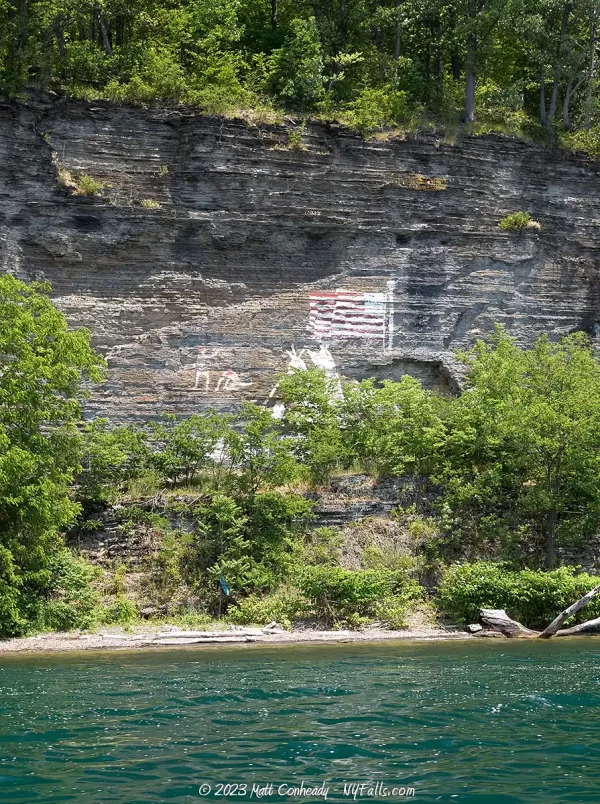
The origin of painted rocks on the cliffs at the southeast end of the lake are the subject of much confusion. They are often described as being the celebratory paintings of Seneca tribe warriors who narrowly escaped death as they crossed the lake at this point using previously hidden canoes, leaving General Sullivan and his campaign behind. This daring escape was the beginning of their flight to Fort Niagara to meet with their British allies. They returned after the Revolutionary War was over and painted this commemoration.
The painting consists of an American flag, a teepee, and what appears to be several Native Americans. The site is near Hector, north of Watkins Glen, along a steep cliff that appears to have the remnants of an old cliff trail down to the shore.
The general consensus among historians is that the escape to Fort Niagara did happen, but that this painting was not done by the escapees nor their tribe. For one, the steep cliffs here seem like an unlikely place to reach the shore, with the well-known, and less dangerous nearby launch sites at Excelsior Glen and Catharine Creek. Secondly, the Iroquois did not construct teepees, the characteristic residence of native tribes out west. Written records also state that the warriors escaped on horseback, not in canoes. Canoes certainly wouldn’t have gotten them as far as Fort Niagara. Additionally, no mention of the painting exists in records until the 1880s, 100 years after the Sullivan campaign. Finally, the color and compositions were found by archaeologists to be uncharacteristic of native tribes.
So where did the paintings come from? Inspired by seemingly legitimate illustrations painted on rocks in the nearby Excelsior Glen, and looking for a way to promote tourism in the more remote cliff-lined southern end, they were mostly likely done by the boat tour industry, and touched up throughout the years by people who wanted to keep the legend alive.
Who to Contact
General water concerns:
NYSDEC Bureau of Fisheries
625 Broadway Albany, NY 12233
Phone (518) 402-8920
E-mail: [email protected]
State boat launches/access
NYSDEC Region 8
6274 East Avon-Lima Road
Avon, NY 14414
Phone (585) 226-2466
E-mail: [email protected]